
Hi, I'm Mark W.. I live in Charlotte.
Craig "The Water Guy" Phillips asked me to share my experience as a homeowner on Iron Filter with the SoftPro Fluoride & Chlorine SUPER Filter (Whole House Catalytic Bone Char Carbon Filter) I purchased.
This is how my adventures played out. I hope this helps you in your decision.
The Water Quality Problem That Started It All
Living in Charlotte, I thought our municipal water was decent enough. But over the past year, I started noticing things that made me question what was actually coming out of our taps. The water had this faint chlorine smell that reminded me of swimming pools, especially in the mornings. My wife complained that her coffee tasted "off," and I noticed our ice cubes had a strange aftertaste that lingered.
What really got my attention was the fluoride concern.
After doing some research about fluoride exposure and its potential effects, especially with young kids in the house, I realized I wanted more control over what our family was drinking and cooking with. The municipal treatment added fluoride, but I wanted the choice to filter it out.
Then there were the subtle signs I'd been ignoring. Our white clothes seemed to pick up a dingy look faster than they should. The plants I watered with tap water weren't thriving like the ones getting rainwater. My skin felt dry after showers, and I found myself reaching for lotion more often than usual.
I tested our water with a basic TDS meter and got readings around 180 PPM, which isn't terrible, but it made me curious about what exactly was dissolved in there. The chlorine was obvious from the smell, but I wondered what other treatment chemicals and contaminants might be present that I couldn't detect with my nose or basic testing.
Research Phase: Understanding Whole House Filtration Options
I'll be honest – I initially looked into simple carbon pitcher filters and under-sink systems. They seemed easier and cheaper. But after calculating how much we use water for drinking, cooking, ice making, and even pet bowls, I realized a point-of-use system would either be inadequate or incredibly inconvenient.
The whole house approach made sense because every drop coming into our home would be filtered. No more worrying about which faucet to use, no more filling pitchers, and no more wondering if the pasta water or coffee was getting the same treatment as our drinking water.
I researched different filtration technologies extensively.
Standard activated carbon removes chlorine and improves taste, but I learned that bone char carbon has unique properties for fluoride reduction that regular carbon lacks. The catalytic carbon component handles chloramines and other treatment chemicals that basic carbon might miss.
The upflow design caught my attention because it prevents channeling and ensures better contact time between water and media. I'd read about downflow systems where water can create channels through the media bed, reducing effectiveness over time. The upflow configuration forces water through the entire bed more evenly.
Capacity was another consideration. Our household uses about 300 gallons per day on average, so I needed something that could handle peak flow rates without pressure drops. The SoftPro system was rated for up to 15 GPM, which seemed adequate for our simultaneous usage patterns.
Why I Chose the SoftPro Bone Char Carbon System
Several factors led me to the SoftPro Fluoride & Chlorine SUPER Filter. The bone char carbon specifically targets fluoride removal, which was my primary concern. Most standard carbon systems don't address fluoride effectively, so this was a key differentiator.
The catalytic carbon component handles chloramines, which I learned our water utility sometimes uses instead of straight chlorine. I wanted a system that could adapt to seasonal treatment changes without losing effectiveness.
The upflow design appealed to me from an engineering standpoint.
Water enters at the bottom and flows upward through the media bed, which prevents https://www.softprowatersystems.com/products/whole-house-upflow-catalytic-bone-char-carbon-water-filter compaction and ensures even distribution. This design also allows for better backwashing to clean accumulated sediments.
SoftPro's reputation in the water treatment industry gave me confidence. They've been manufacturing systems for decades, and their technical support seemed knowledgeable when I called with pre-purchase questions. The warranty coverage was comprehensive, and replacement media was readily available.
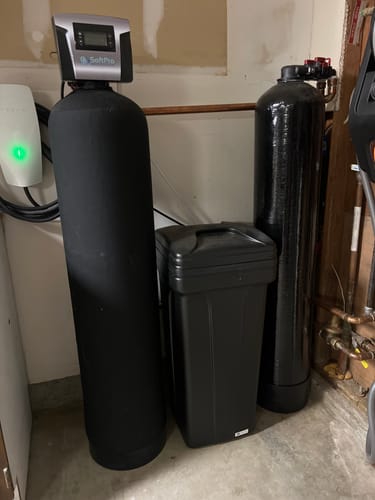
The system size fit my available space in the garage without requiring major plumbing modifications. At 54 inches tall and 13 inches in diameter, it was substantial but manageable for the installation location I had in mind.
Unboxing and First Impressions

The system arrived on a freight truck, carefully strapped to a pallet. The packaging was professional-grade with plenty of protective materials. Everything arrived in perfect condition, which was reassuring given the size and weight of the components.
The main tank impressed me immediately. The fiberglass construction felt solid and substantial – not like some of the lightweight plastic systems I'd seen. The control head looked well-built with clear markings and robust fittings. All the internal components appeared to be quality materials designed for long-term use.
The documentation package was thorough.
Installation manual, operation guide, warranty information, and technical specifications were all included. The diagrams were clear, and the step-by-step instructions seemed straightforward for someone with basic plumbing skills.
I was surprised by the amount of bone char and catalytic carbon media included. The bags were heavy and substantial – you could tell this wasn't a skimpy amount of filtration material. The media had a clean, consistent appearance without excessive dust or debris.
Installation Experience and That Critical Mistake
This is where my experience took an unexpected turn, and I learned a valuable lesson that I wish someone had emphasized more clearly in the documentation.
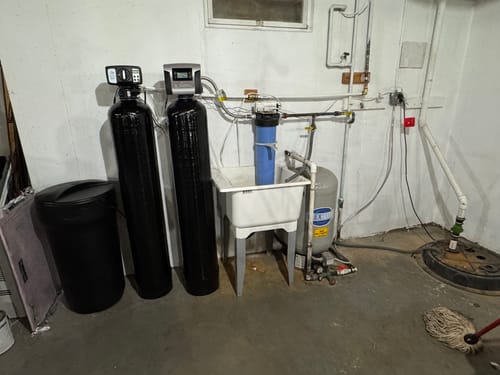
The physical installation was straightforward for someone comfortable with basic plumbing. I installed it on the main water line after the pressure tank but before the water heater and household distribution. The bypass valve installation was simple, and all the fittings connected without issues.
Here's where I made the mistake that caused significant problems.
The documentation mentioned flushing the system, but I didn't fully understand the critical importance of this step. I thought a quick rinse would be sufficient before connecting it to the household plumbing.
What I should have done was run the backwash cycle multiple times and flush extensively before ever connecting the system to the house lines. The bone char and catalytic carbon media, while high-quality, contains fine particles that need to be thoroughly cleared from the system.
Instead, I connected everything and turned on the water supply. Within hours, we had black particles coming out of every faucet, shower head, and appliance in the house. The toilets had black sediment settling in the bowls. The washing machine's first load came out with gray streaks. It was a mess.
The cleanup process was extensive and frustrating.
I had to remove and clean every faucet aerator in the house. The toilet fill valves got clogged and needed attention. The dishwasher required running several empty cycles to clear the debris. Even our coffee maker needed multiple cleaning cycles to get the carbon particles out of the internal lines.
This whole ordeal took the better part of two days to resolve completely. I had to shut off the main filter system, run it isolated with a temporary drain setup, and backwash it repeatedly until the water ran clear. Only then could I safely reconnect it to the household system.
Performance Results After Proper Installation
Once properly flushed and installed, the system's performance has been impressive. The difference in water quality was noticeable within the first week of operation.
The chlorine smell disappeared completely. Our morning coffee tastes significantly better – my wife noticed immediately and commented that she could actually taste the coffee flavor without the chemical undertones. Ice cubes are crystal clear and taste neutral, which makes a difference in drinks.
I tested the fluoride reduction with test strips and saw significant improvement.
Our municipal water typically contains 0.7-1.0 PPM fluoride, and post-filtration tests show levels below 0.2 PPM consistently. This reduction level met my expectations for protecting my family while still maintaining some trace minerals.
The TDS readings dropped from around 180 PPM to approximately 160 PPM. This indicates the system is removing dissolved chemicals without over-processing the water or removing beneficial minerals completely.
Water pressure throughout the house remained strong. I was concerned about flow restrictions, but even with multiple fixtures running simultaneously, we haven't experienced any noticeable pressure drops. The system handles our peak usage periods without issues.
Our plants are responding better to the filtered water. The houseplants that were looking stressed have perked up, and my vegetable garden seems more vibrant when watered with the hose.
Ongoing Operation and Maintenance Requirements
The system has been operating for eight months now, and the maintenance routine has become straightforward. The control head automatically handles the backwash cycles, which occur approximately every 10 days based on our water usage.
Each backwash cycle uses about 120 gallons of water and takes roughly 45 minutes to complete. I can hear it running in the garage, but it's not objectionably loud. The automatic timer handles everything, so I don't need to remember to initiate the cycles manually.
The only regular maintenance I perform is checking the salt level monthly.
The system uses about 8 pounds of salt per backwash cycle, so I add a 40-pound bag approximately every 5-6 weeks. This cost works out to about $15 per month for salt, which is reasonable considering the system size and our usage.
I test the water quality quarterly with fluoride test strips and TDS measurements to verify consistent performance. Results have remained stable, indicating the media is working effectively and hasn't reached saturation yet.
The system's performance hasn't degraded noticeably over the eight months. Water quality remains consistent, flow rates are stable, and the backwash cycles complete normally. Based on the manufacturer's projections, I expect 3-5 years before media replacement becomes necessary.
Cost Analysis and Value Assessment
The initial investment was substantial – around $2,800 including shipping and installation materials. When compared to bottled water costs or multiple point-of-use filters, the economics become favorable over time, especially for a whole-house solution.
Monthly operating costs include approximately $15 for salt and minimal electricity for the control head operation. The water used for backwashing adds about $8 monthly to our utility bill. Total monthly operating cost is under $25.
When I calculate the cost per gallon of filtered water, it works out to less than $0.02 per gallon after the first year.
Compared to bottled water at $1-2 per gallon, or even basic pitcher filters at $0.10 per gallon, the whole-house system provides excellent value for the volume of water we use.
The system has eliminated our bottled water purchases completely, saving approximately $40 monthly. We also use less soap and detergent because the water works more effectively for cleaning, adding modest additional savings.
From a health perspective, having fluoride-free water for cooking, drinking, and bathing provides peace of mind that's difficult to quantify but valuable to our family. The improved taste and reduced chemical exposure feel worth the investment.
Final Thoughts and Recommendations
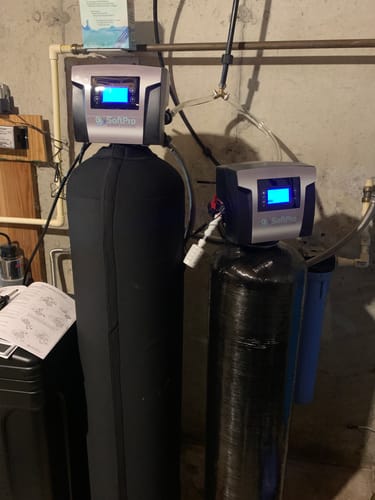
Despite the initial installation challenges caused by my inadequate flushing, I'm satisfied with the SoftPro Bone Char Carbon system's performance. The water quality improvements are exactly what I hoped for, and the system operates reliably with minimal maintenance requirements.
The most important advice I can give to anyone considering this system is to take the initial flushing process seriously.
Plan to spend a full day properly backwashing and flushing before connecting to your household plumbing. This extra time investment will save you days of cleanup and frustration.
This system is ideal for households concerned about fluoride exposure, chlorine taste and odor, and overall water quality improvement. The whole-house approach provides consistent treatment for all water uses, which is particularly valuable if you have children, pets, or family members with chemical sensitivities.
The investment makes most sense for families using significant amounts of water daily and those prioritizing long-term health considerations over short-term costs. If your primary concern is basic chlorine removal, simpler systems might meet your needs at lower cost.
For our situation – fluoride removal priority, whole-house coverage, and long-term value – the SoftPro system has delivered on its promises once properly installed and flushed. I would purchase it again, but I'd definitely handle the initial setup more carefully.