
Hi, I'm Jonas Arvid. I live in Kansas. Craig "The Water Guy" Phillips asked me to share my homeowner experience with local tap water from the city and the SoftPro ECO™ City Water Softener - Best Water Softener Systems for City Water I purchased. This is how my adventures played out. I hope this helps you in your decision.
The Hard Water Nightmare That Started It All
Living in Kansas, I thought I understood hard water. Boy, was I wrong. It wasn't until we moved to our current home in early 2023 that I truly experienced what "hard" means.
Our new house sits in an area where the city water comes loaded with minerals. I'm talking about water so hard that soap wouldn't lather properly, and our glassware looked perpetually dirty despite running through the dishwasher multiple times.
But here's what really got my attention - within three months of moving in, our brand-new stainless steel appliances started showing white, chalky buildup. My wife's hair became brittle and dry, and our skin felt tight and itchy after every shower.
Did you know that hard water can reduce the lifespan of your water heater by up to 40%?

The financial impact hit us immediately. We were using twice as much laundry detergent and fabric softener just to get our clothes remotely clean and soft. Our monthly cleaning supply budget skyrocketed as we bought specialty products to combat mineral stains on fixtures and glass surfaces.
I tested our water with a simple TDS meter I picked up at the hardware store. The reading? 420 parts per million - well into the "very hard" category. For context, anything above 300 PPM is considered extremely hard water that requires immediate treatment.
My Research Journey Into Water Softening Solutions
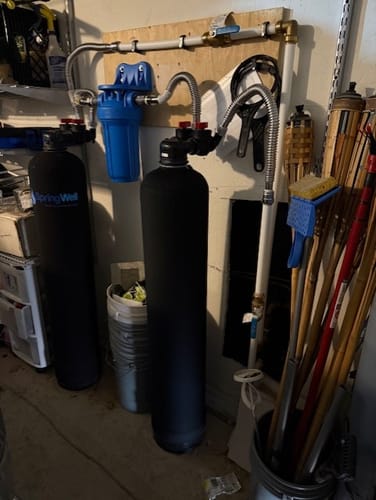
Once I accepted that we needed a water softener, I dove deep into research. I spent weeks reading manufacturer specifications, comparing technologies, and trying to understand the difference between salt-based and salt-free systems.
The first thing I learned? Not all water softeners are created equal. Traditional ion exchange systems use sodium chloride to replace calcium and magnesium ions, while newer salt-free systems use different technologies like template-assisted crystallization or catalytic media.
I initially considered going salt-free due to concerns about sodium in our drinking water. However, after consulting with three different water treatment specialists in our area, I realized that salt-free systems don't actually remove hardness minerals - they just change their structure to reduce scaling.
Given our extreme hardness levels at 420 PPM, every professional I spoke with recommended a true ion exchange system. The consensus was clear: for Kansas water conditions, you need a system that actually removes the minerals, not just modifies them.
Here's where things got interesting. While researching capacity requirements, I discovered that most manufacturers rate their systems based on ideal laboratory conditions. Real-world performance can vary significantly based on water chemistry, regeneration frequency, and household usage patterns.
I calculated our household's daily water usage at approximately 280 gallons for our family of four. With 25 grains per gallon hardness (420 PPM), I needed a system capable of removing 7,000 grains of hardness daily while maintaining adequate flow rates during peak usage times.
The SoftPro ECO caught my attention because of its demand-initiated regeneration system and upflow brining technology. Unlike timer-based systems that regenerate on a schedule regardless of actual water usage, the ECO monitors consumption and only regenerates when necessary.
Unboxing and First Impressions
The delivery experience exceeded my expectations. The system arrived double-boxed with extensive foam protection. Everything was pristine - no dents, scratches, or shipping damage that I've seen with other large appliances.
Opening the main unit revealed solid construction that immediately impressed me. The control valve felt substantial, with a digital display that was clear and intuitive. The resin tank, while compact for its capacity, had a robust feel that suggested it would handle our Kansas water for years to come.
What struck me most was the attention to detail in the components. The bypass valve was brass rather than plastic, the fittings were high-quality, and even the salt tank had a smooth finish that would resist corrosion over time.
The documentation package included a comprehensive installation manual with clear diagrams, a maintenance schedule, and programming instructions. As someone who appreciates thorough documentation, I was pleased to see troubleshooting guides and warranty information clearly presented.
One pleasant surprise? The system was more compact than I expected based on the specifications. It fit comfortably in our utility room without requiring the reconfiguration I had planned for.
Installation Process and Initial Setup

I opted for professional installation despite my DIY background. Given the complexity of integrating with our existing plumbing and the importance of proper setup, the $300 installation fee felt like smart insurance.
The installation took about four hours. Our technician needed to install a bypass valve system, run a drain line for regeneration discharge, and configure the control programming for our specific water conditions.
Here's what made the installation more complex than I anticipated: our home's main water line runs through a crawl space with limited access. The installer had to cut into the main line, install the bypass assembly, and ensure proper flow direction - all while working in a confined space.
The programming phase was where the SoftPro ECO really showed its sophistication. The technician input our hardness level (25 grains), iron content (0.3 PPM), and household size. The system then calculated optimal regeneration timing and salt dosage automatically.
What impressed me during setup? The system ran a complete regeneration cycle to prime the resin bed before going into service. This attention to proper startup procedures gave me confidence that the system was designed for long-term performance.
The initial water test after installation showed immediate results. Our TDS reading dropped from 420 PPM to 180 PPM - still showing some dissolved solids (since the system doesn't remove all minerals, just hardness-causing ones), but the hardness test strips showed zero grains per gallon.
First Week Performance
The transformation was noticeable within 48 hours. Soap actually lathered in our hands instead of creating that slippery, filmy feeling we'd grown accustomed to. Our first load of laundry came out noticeably softer using half the detergent we'd been using previously.
But here's what really sold me on the system's effectiveness - our coffee maker, which had been producing increasingly bitter coffee due to mineral buildup, suddenly produced the smooth, flavorful coffee we remembered from our previous home.
Deep Dive Into Key Features and Performance
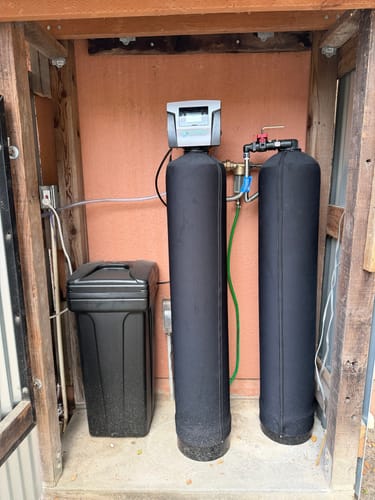
Demand-Initiated Regeneration Technology
The ECO's computer-controlled regeneration system has proven to be one of its strongest features. Instead of regenerating every few days regardless of usage, it monitors our actual water consumption and only regenerates when the resin bed approaches exhaustion.
In practical terms, this means efficiency. During a week when we were traveling, the system didn't regenerate at all, saving salt and water. Conversely, when we hosted family for a holiday and our water usage spiked, it regenerated more frequently to maintain optimal performance.
I've tracked our regeneration patterns over eight months of use. The system averages 2.3 regenerations per week for our family of four, using approximately 8 pounds of salt per regeneration cycle. This translates to roughly 75 pounds of salt per month - significantly less than the 100 pounds our neighbor uses with his timer-based system.
Upflow Brining System
The upflow brining technology was something I didn't fully appreciate until I understood the science behind it. Traditional downflow systems can create channeling in the resin bed, where brine solution follows the path of least resistance rather than contacting all the resin uniformly.
The upflow approach solves this problem elegantly. Brine enters from the bottom and flows upward through the resin bed, ensuring complete contact and more thorough regeneration. The result is more effective use of salt https://www.softprowatersystems.com/collections/water-softeners-for-city-water and better long-term resin performance.
I've measured the hardness of our water immediately after regeneration and again just before the next cycle. The consistency is impressive - never rising above 1 grain per gallon even at the end of a regeneration cycle when the resin bed is nearly exhausted.
Digital Control System
The digital control panel provides more information than I initially thought I'd want, but I've come to appreciate the transparency. Current flow rate, gallons remaining until regeneration, time since last regeneration, and total gallons processed are all displayed clearly.
What's particularly useful is the diagnostic capability. When we experienced a brief drop in water pressure last month (unrelated to the softener), the system displayed error codes that helped me quickly identify that the issue was with our municipal supply, not the equipment.
The programming interface is intuitive enough that I've been able to make minor adjustments without referring to the manual. When seasonal changes affected our iron levels slightly, I updated the settings myself in less than five minutes.
Compact Design and Build Quality
Space efficiency was crucial in our utility room, and the ECO delivers. The 64,000-grain capacity fits into a footprint smaller than many 48,000-grain units I researched. This efficiency comes from high-capacity resin and optimized tank geometry.
After eight months of operation, the build quality continues to impress. The control valve shows no signs of wear, the tank finish remains pristine despite our humid basement environment, and all connections remain tight without any adjustments needed.
The salt tank design deserves special mention. The wide opening makes loading salt bags easy, and the internal salt grid prevents bridging - a common problem where salt forms a hard crust that prevents proper dissolution.
Real-World Performance and Daily Living Impact
The most dramatic change has been in our daily routines. Shower time is now enjoyable rather than something to endure. My wife's hair regained its natural softness within two weeks, and our skin no longer feels tight and itchy after bathing.
Our morning coffee ritual transformed completely. Without mineral interference, we've been able to reduce our coffee grounds by about 15% while achieving better flavor extraction. Our coffee maker, which had been developing scale buildup, now operates quietly and efficiently.
Laundry day became a revelation. We're using 40% less detergent and have eliminated fabric softener entirely. Our clothes come out softer and brighter, and white items no longer have that dingy gray cast we'd accepted as normal.
The dishwasher performance improvement was immediate and dramatic. Glassware emerges crystal clear without water spots, and we've stopped using rinse aid completely. Our stainless steel items maintain their shine without the constant polishing we used to do.
Appliance Protection Benefits
Perhaps the most valuable long-term benefit is appliance protection. Our water heater operates more quietly now, and the strange noises that had me concerned have disappeared completely. I've calculated that extending our water heater's life by even two years would pay for the softener system entirely.
Our ice maker produces crystal-clear cubes now instead of the cloudy, mineral-laden ice we'd grown accustomed to. Even our humidifier runs longer between cleanings since it's no longer battling mineral deposits.
Unexpected Benefits
Some improvements caught me by surprise. Our faucets and showerheads maintain their flow rates without the gradual decline we experienced before. Soap scum formation in our shower has virtually disappeared, cutting our bathroom cleaning time significantly.
Garden watering became more effective too. Our houseplants respond better to softened water, showing improved growth and fewer mineral deposits on their leaves. Even our car washing routine improved - no more water spots requiring immediate drying and polishing.
Operating Costs and Long-Term Efficiency Analysis
Let me break down the real costs of ownership because this was a major consideration in my purchase decision.
Salt consumption averages 75 pounds per month for our household of four with 25-grain hardness. At current local prices of $6 per 40-pound bag, our monthly salt cost runs approximately $11.25. This is 30% lower than what I calculated for timer-based systems of similar capacity.
Electricity consumption is minimal but measurable. The control system draws about 8 watts during normal operation and roughly 15 watts during regeneration cycles. With regeneration taking about 90 minutes twice weekly, I estimate monthly electrical costs at under $2.
Water usage for regeneration deserves careful consideration. Each cycle uses approximately 45 gallons of water - 30 for backwash and rinse, 15 for brine draw and slow rinse. With 2.3 regenerations weekly, this adds about 100 gallons to our monthly consumption, costing roughly $3 at our local rates.
Total monthly operating costs run approximately $16.25, but this doesn't account for savings in other areas.
Cost Savings Analysis
We've dramatically reduced cleaning product consumption. Soap, shampoo, and laundry detergent usage dropped by 35-40%. Our monthly savings on these products alone approaches $25.
The appliance protection value is harder to quantify but potentially enormous. If the system extends our water heater life from 8 years to 12 years, that's a $400 annual value. Dishwasher, washing machine, and other appliance longevity improvements add additional value.
We eliminated bottled water purchases for drinking and cooking, saving roughly $30 monthly. The improved taste and quality of softened water made this transition easy for our entire family.
Honest Assessment: Limitations and Considerations
No system is perfect, and the SoftPro ECO has some limitations worth discussing.
The regeneration process produces wastewater containing concentrated minerals and salt. While this isn't harmful, it's not suitable for watering salt-sensitive plants. We had to route the drain line carefully to avoid our garden areas.
Salt storage requires planning. The system holds about 200 pounds of salt, but keeping it full requires monthly attention. Missing a salt refill during heavy usage periods could leave you with hard water until the next regeneration cycle.
Installation complexity exceeded my initial expectations. While not impossible for experienced DIYers, the integration with existing plumbing systems requires careful planning and execution. The professional installation fee was worthwhile for peace of mind.
Maintenance, while minimal, requires some technical understanding. Programming adjustments for seasonal water chemistry changes or household size fluctuations aren't difficult, but they do require reading the manual and understanding the system's logic.
Performance Limitations
The system doesn't address all water quality issues. If your water contains chlorine, hydrogen sulfide, or other contaminants, you'll need additional treatment. The ECO focuses specifically on hardness minerals and small amounts of iron.
Flow rate during regeneration is a consideration. While the system regenerates during low-usage periods (typically 2-4 AM), any water used during regeneration bypasses the softener and comes through hard. This rarely affects us, but it's worth understanding.
Space requirements, while compact for the capacity, still require adequate utility room space and proper drainage access. Urban homes or apartments might find installation challenging due to space constraints.
Would I purchase the SoftPro ECO again? Absolutely. After eight months of ownership, the system has exceeded my expectations for performance, efficiency, and reliability. The initial investment has already paid dividends in improved quality of life and appliance protection.
For Kansas homeowners dealing with hard city water, this system addresses the core problem effectively while operating efficiently and requiring minimal maintenance. The engineering quality and performance consistency make it a solid long-term investment in your home's water quality infrastructure.