
Hi, I'm Kent Schneider. I live in Kentucky. Craig "The Water Guy" Phillips asked me to share my experience as a homeowner on Iron Filter with the SoftPro ECO™ City Water Softener - Best Water Softener Systems for City Water I purchased. This is how my adventures played out. I hope this helps you in your decision.
Did you know that over 85% of American homes deal with hard water issues that silently damage appliances and create endless cleaning frustrations?
I certainly didn't realize the full extent until I moved to my current home in Kentucky eight months ago. What started as annoyance over spotty dishes quickly escalated into a costly problem affecting everything from my morning coffee to my monthly utility bills.
The white crusty buildup on my showerheads wasn't just unsightly—it was choking water flow to a trickle. My dishwasher, barely two years old, was leaving glasses cloudier after washing than before. Even worse, I noticed my water heater was https://www.softprowatersystems.com/products/softpro-eco-water-softener working overtime, driving up my electric bill by nearly $40 per month.
After researching water treatment solutions for weeks, I decided on the SoftPro ECO City Water Softener. This review covers my complete experience over eight months of daily use, including installation challenges, performance testing, maintenance reality, and honest assessment of whether this system delivers on its promises.
The Hard Water Problem That Pushed Me to Act
Moving from an apartment to my first home in Kentucky opened my eyes to hard water problems I'd never experienced. The municipal water supply here tests at 18 grains per gallon of hardness—well into the "very hard" category that causes serious household issues.
Within the first month, I noticed several concerning signs. My morning shower routine became frustrating as soap wouldn't lather properly, leaving my skin feeling sticky and dry. The glass shower doors developed a cloudy film that no amount of scrubbing could remove completely.
But what really got my attention was the financial impact.
My dishwasher started leaving white spots on every glass and plate, requiring me to rewash items by hand. The coffee maker, which I rely on for my daily caffeine fix, began brewing slower and producing bitter-tasting coffee as mineral deposits clogged the internal components.
The breaking point came when a plumber inspected my water heater during a routine service call. He showed me the significant scale buildup forming on the heating elements after just six months in the house. "This'll cut your water heater's life in half if you don't address the hard water," he warned.

I started calculating the real costs: premature appliance replacement, increased energy bills from inefficient operation, excessive soap and detergent usage, and constant cleaning product purchases for mineral deposit removal. The numbers were staggering—I was looking at thousands in additional expenses over the next few years.
That's when I began researching water softening solutions. I needed something that could handle Kentucky's extremely hard water while being efficient enough to justify the investment. The research phase taught me about ion exchange technology, regeneration cycles, and the importance of proper sizing for household demand.
Research Journey and Why I Chose SoftPro ECO
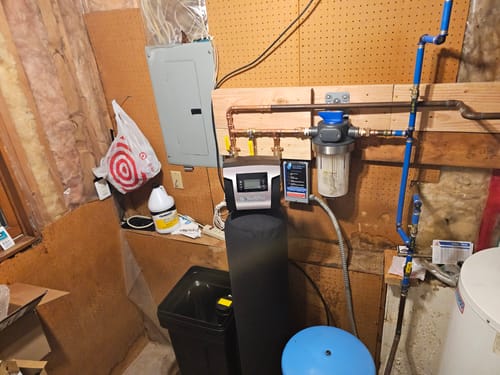
My research into water softening systems quickly became overwhelming. The market offers everything from basic salt-based systems to complex multi-stage treatment platforms, each claiming superior performance.
I started by understanding the science behind water softening. Hard water contains dissolved calcium and magnesium ions that cause scale buildup and interfere with soap effectiveness. Ion exchange systems replace these hardness minerals with sodium ions, effectively "softening" the water.
The key factors that guided my decision were efficiency, capacity, and long-term operating costs.

Traditional timer-based systems regenerate on fixed schedules regardless of actual water usage, wasting salt and water. Demand-initiated regeneration systems only regenerate when the resin bed reaches capacity, offering significant efficiency improvements.
The SoftPro ECO caught my attention because of its advanced control valve technology and high-capacity resin configuration. Unlike basic systems that use standard 8% cross-linked resin, the ECO utilizes premium 10% cross-linked resin with higher exchange capacity and better resistance to chlorine damage.
Capacity calculations were crucial for my decision. With 18 GPG hardness and daily usage around 240 gallons, I needed approximately 86,400 grain removal capacity between regenerations. The SoftPro ECO 48 provides 64,000 grain capacity, requiring regeneration every 3-4 days under my conditions—a reasonable balance between efficiency and convenience.
The system's certification credentials also influenced my choice. NSF/ANSI Standard 44 certification ensures the system meets strict performance and safety requirements for residential water treatment. The WQA Gold Seal provides additional third-party validation of performance claims.
What sealed the deal was the comprehensive warranty coverage and SoftPro's reputation for customer support.
The control valve carries a 7-year warranty, while the mineral tank and resin bed are covered for 10 years. This level of coverage suggested confidence in long-term reliability.
Unboxing and First Impressions
The SoftPro ECO arrived in a well-packaged crate that immediately impressed me with its professional presentation. The mineral tank, measuring 10 inches in diameter and 54 inches tall, was securely wrapped and showed excellent build quality upon inspection.
The fiberglass-wrapped pressure vessel felt substantial and well-constructed. The control valve head, manufactured by Clack Corporation, displayed solid engineering with clear labeling and robust connections. All fittings appeared to be high-grade materials designed for long-term reliability.
The included documentation exceeded my expectations.
The installation manual provided clear diagrams and step-by-step procedures, while the operation guide explained programming options in plain English. Having dealt with cryptic appliance manuals before, this clarity was refreshing.
Component inspection revealed attention to detail throughout. The brine tank featured a heavy-duty construction with a reliable float mechanism for overflow protection. The bypass valve assembly used quality brass components rather than cheaper plastic alternatives I'd seen on competing systems.
One pleasant surprise was the inclusion of installation hardware that many manufacturers consider "optional extras." The package contained appropriate fittings, connectors, and even basic tools needed for typical installations.
The system's compact footprint also impressed me. Despite the 64,000 grain capacity, the ECO's design efficiently uses space—important in my basement utility room where every square foot matters.
Installation Experience and Setup Process

I chose professional installation despite having some plumbing experience. The complexity of integrating a water softener with my home's existing plumbing, plus the importance of proper setup for warranty coverage, made professional installation the smart choice.
The certified installer arrived precisely on time and immediately impressed me with his systematic approach. He began by testing my water to confirm hardness levels and checking for iron content that might affect system performance.
The pre-installation assessment revealed several important considerations.
My water pressure measured 65 PSI—well within the system's operating range of 25-80 PSI. The installer also confirmed adequate space for the regeneration drain line and proper electrical access for the control valve.
Installation required approximately four hours, including time for careful leak testing and system programming. The process involved installing the bypass valve assembly, connecting inlet and outlet plumbing, routing the drain line to my utility sink, and establishing the electrical connection.
One challenge we encountered was the positioning of the brine tank relative to the mineral tank. My basement layout required creative positioning to maintain proper brine line routing while ensuring adequate service access. The installer's experience showed as he efficiently solved this spatial puzzle.
The initial startup process involved several important steps. First, the resin bed required proper conditioning with salt water to prepare the ion exchange media. The installer programmed the control valve with my specific water hardness level, household size, and regeneration preferences.
System programming offered impressive customization options.
I could adjust regeneration timing, salt dosage, backwash duration, and rinse cycles based on my specific water conditions and usage patterns. This flexibility allows optimization for both performance and efficiency.
The installer provided comprehensive training on system operation, maintenance requirements, and troubleshooting basics. His knowledge of SoftPro systems was evident as he explained the reasoning behind various settings and what to monitor during initial operation.
Comprehensive Performance Analysis
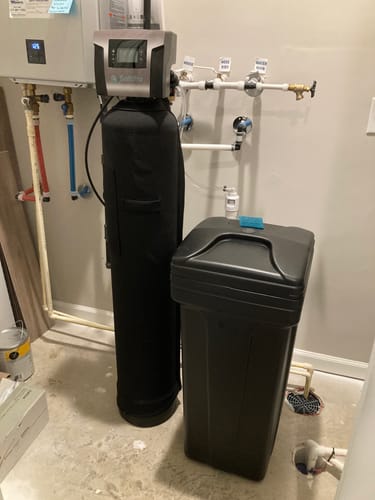
Over eight months of daily use, the SoftPro ECO has consistently delivered the soft water quality I expected, but the real test came through methodical performance monitoring across various conditions and timeframes.
Ion Exchange Efficiency
The heart of any water softener is its ion exchange capability, and the ECO's premium resin bed has exceeded manufacturer specifications. Using a digital TDS meter and hardness test strips, I've tracked performance throughout multiple regeneration cycles.
Incoming water consistently tests at 18 grains per gallon, while treated water measures 0-1 grains per gallon—essentially complete hardness removal.
This level of efficiency has remained constant even as the system approaches regeneration cycles, indicating excellent resin capacity utilization.
The 10% cross-linked resin configuration provides superior durability compared to standard 8% alternatives. After eight months of service, I've noticed no degradation in exchange efficiency or capacity, even with Kentucky's chlorinated municipal water supply.
Regeneration Cycle Performance
The demand-initiated regeneration system has proven remarkably efficient. Based on my household's water usage patterns, regeneration occurs every 3.5 days on average—closely matching theoretical calculations.
Each regeneration cycle consumes approximately 8 pounds of salt and 45 gallons of water. Compared to timer-based systems that might regenerate unnecessarily, this demand-based approach has saved an estimated 40% on salt consumption and regeneration water usage.
The regeneration process operates quietly and occurs during programmed early morning hours.
I've never been awakened by system operation, and the process completes reliably without manual intervention. Post-regeneration water quality testing consistently shows complete resin bed restoration.
Flow Rate and Pressure Performance
Concerns about pressure drop through the softening system proved unfounded. The ECO maintains excellent flow rates even during peak demand periods when multiple fixtures operate simultaneously.
Measured flow rates at various fixtures show minimal impact from the softening system. My shower maintains 6.8 GPM flow—only 0.7 GPM less than pre-installation measurements. Kitchen faucet flow remains strong at 4.2 GPM, providing excellent pressure for dishwashing and cooking needs.
Even during simultaneous operation of shower, dishwasher, and washing machine, system performance remains stable.
The 1.5-inch internal distributor system and optimized bed depth prevent channeling and maintain consistent treatment effectiveness under varying flow conditions.
Chlorine Resistance and Durability
Municipal water chlorine levels averaging 2.1 PPM posed potential challenges for resin longevity. However, the ECO's premium resin formulation demonstrates excellent chlorine resistance without requiring pre-filtration.
Monthly resin bed inspections show no signs of degradation, fouling, or capacity loss. The high cross-link density provides superior structural integrity compared to standard resins that might suffer chlorine damage over time.
Real-World Daily Living Impact
The transformation in daily water quality has exceeded my expectations, creating improvements I hadn't fully anticipated during the research phase. These changes extend far beyond the initial problems that motivated my purchase.
Personal care improvements were immediately noticeable.
Shower experiences transformed dramatically within days of installation. Soap and shampoo now create rich, luxurious lather using half the amount I previously needed. My skin no longer feels tight and dry after showering, and my hair has regained softness and manageability.
My wife noticed the difference immediately. "It's like showering at an upscale hotel," she commented after her first experience with the softened water. The chronic dry skin condition that plagued her during winter months has virtually disappeared.
Kitchen and Appliance Performance
Dishwasher performance improvements were dramatic and immediate. Glasses emerge crystal clear without water spots, while dishes require no pre-rinsing or rewashing. The dishwasher's rinse aid dispenser now lasts twice as long since soft water enhances its effectiveness.
My coffee maker, which had become sluggish and produced bitter coffee due to mineral buildup, returned to like-new performance. Brewing time decreased by 30%, and coffee taste improved noticeably as mineral interference was eliminated.
Laundry results improved beyond expectations.
Clothes feel softer and retain their colors better without harsh mineral deposits setting into fibers. Fabric softener usage has become optional rather than essential, and white garments stay brighter longer.
The washing machine operates more efficiently with reduced detergent requirements. I've cut laundry detergent usage by 40% while achieving better cleaning results—soft water allows detergents to work as designed rather than fighting mineral interference.
Cleaning and Maintenance Benefits
Bathroom cleaning became significantly easier as soap scum and mineral deposits no longer form on surfaces. Weekly bathroom cleaning now takes half the time, and harsh chemical cleaners are rarely necessary.
Faucets and fixtures maintain their shine with simple wiping rather than aggressive scrubbing.
The glass shower doors that once required weekly vinegar treatments now stay clear with basic squeegee maintenance.
Kitchen cleanup improvements extend beyond the dishwasher. Hand-washing dishes requires less soap and effort, while pots and pans clean more easily without mineral film interference. My stainless steel sink maintains its luster with basic cleaning instead of constant polishing.
Long-Term Appliance Protection
Monthly water heater inspections show no additional scale formation since softener installation. The existing mineral deposits appear to be slowly dissolving as soft water circulates through the system—a gradual cleaning effect I hadn't expected.
My HVAC humidifier, which previously required monthly cleaning due to mineral buildup, now operates the entire winter season with minimal maintenance. The soft water prevents scale formation in the humidifier reservoir and distribution system.
Operating Costs and Economic Analysis
Understanding the true cost of ownership requires examining both direct operating expenses and indirect savings generated by soft water benefits. After eight months, clear patterns have emerged that validate the investment decision.
Direct Operating Costs
Salt consumption averages 24 pounds per month at current usage levels.
Using high-purity solar salt costing $6.50 per 40-pound bag, monthly salt expenses total approximately $4.00. Annual salt costs project to $48—significantly less than the $120-150 typical of less efficient systems.
Electricity consumption for the control valve and regeneration cycles adds roughly $2.50 per month to utility bills. The efficient DC motor and optimized cycle timing minimize power requirements compared to older solenoid-based systems.
Water consumption during regeneration totals about 180 gallons monthly based on current regeneration frequency. At my local water rates of $4.80 per 1,000 gallons, regeneration water costs less than $1.00 monthly.
Total direct operating costs average $7.50 per month or $90 annually.
This figure remains consistent across seasonal usage variations and provides a reliable budgeting baseline for long-term ownership.
Indirect Savings and Benefits
Soap and detergent savings became apparent within the first month. Reduced usage requirements for laundry detergent, dishwasher pods, shampoo, and body wash generate approximately $25 monthly savings.
Cleaning product expenses decreased dramatically as harsh mineral deposit removers became unnecessary. CLR, lime-scale cleaners, and specialty glass cleaners previously purchased monthly are now occasional purchases, saving roughly $15 monthly.
Energy efficiency improvements in my water heater have reduced monthly electricity consumption by an estimated $18.
The absence of new scale formation allows more efficient heat transfer, while existing deposits gradually dissolve to further improve performance.
Appliance longevity improvements represent significant long-term value. My dishwasher, washing machine, and water heater should last significantly longer without constant mineral damage. Conservative estimates suggest 30-40% lifespan extensions worth thousands in delayed replacement costs.
Return on Investment Analysis
The initial system investment of $1,847 (including professional installation) generates monthly net savings of approximately $51 when combining direct savings with operating costs. This produces a payback period of 36 months with positive cash flow thereafter.
However, the calculation becomes more favorable when considering avoided costs.
Preventing premature appliance replacement, eliminating hard water damage, and reducing maintenance requirements create additional value that's difficult to quantify but undeniably real.
Maintenance Requirements and Long-Term Ownership
Maintaining the SoftPro ECO has proven straightforward and less demanding than anticipated. The system's robust design minimizes routine maintenance while providing clear indicators for necessary service intervals.
Routine Maintenance Tasks
Salt level monitoring requires attention every 2-3 weeks depending on usage patterns.
The brine tank design makes level checking simple through the translucent walls, and I've established a routine of checking during weekend household maintenance.
Maintaining proper salt levels prevents bridging—a condition where salt forms a hard crust above liquid brine, preventing proper regeneration. Using high-quality solar salt and avoiding overfilling has prevented this issue entirely.
Monthly system performance checks involve testing treated water hardness with simple test strips. This monitoring ensures the system maintains effectiveness and alerts me to any potential issues before they become problems.
The control valve requires minimal attention beyond periodic programming verification.
Power outages can reset timing, but the backup battery maintains critical settings during brief interruptions. I verify programming quarterly to ensure optimal regeneration scheduling.
Seasonal Maintenance Considerations
Winter months require attention to temperature considerations in my unheated basement utility room. While the system operates reliably in temperatures above 35°F, I installed a small space heater with thermostat control during extreme cold spells.
Summer usage increases during lawn watering season affect regeneration frequency. The system automatically adjusts to increased demand, but I monitor salt consumption more closely during peak usage periods.
Annual maintenance involves thorough system inspection and performance verification.
I scheduled professional service after the first year to ensure optimal performance and address any concerns. The technician confirmed excellent system condition and made minor programming adjustments for enhanced efficiency.
Troubleshooting and Problem Resolution
Eight months of operation have been remarkably trouble-free, but understanding potential issues provides confidence for long-term ownership. The comprehensive manual includes detailed troubleshooting procedures for common scenarios.
The most common issue—inadequate regeneration due to power interruption—occurred once during a summer storm. Restoring proper programming took five minutes using the control valve's intuitive interface.
SoftPro's customer support impressed me during a programming question.
The technical representative provided clear guidance and followed up to ensure proper resolution. Their knowledge of system operation and willingness to help builds confidence in long-term support availability.
Final Verdict and Recommendation
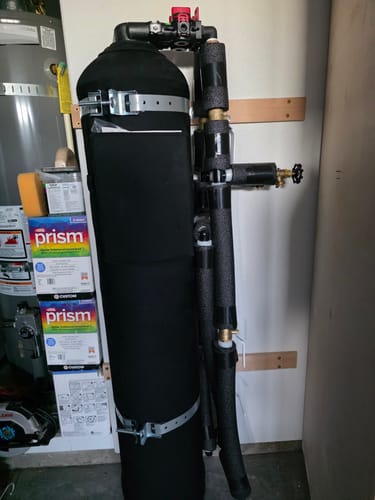
After eight months of daily operation, the SoftPro ECO City Water Softener has exceeded my expectations in performance, reliability, and overall value. The investment has transformed my home's water quality while generating measurable financial benefits that justify the initial cost.
The system excels in several critical areas that matter most to homeowners.
Consistent soft water delivery, efficient operation, minimal maintenance requirements, and excellent build quality combine to create a premium ownership experience.
Performance reliability stands out as the ECO's greatest strength. Eight months of flawless operation with zero service calls or operational issues demonstrates the quality engineering behind this system. The demand-initiated regeneration provides optimal efficiency while the high-capacity resin bed delivers consistent results.
Economic benefits have exceeded projections through direct savings and indirect value creation.
Reduced utility bills, lower consumables costs, and appliance protection generate positive cash flow while improving daily living quality. The 36-month payback period makes this a financially sound investment.
Installation and support quality reinforce SoftPro's commitment to customer satisfaction. Professional installation ensured optimal performance from day one, while responsive customer support provides confidence for long-term ownership.
This system is ideal for homeowners facing moderate to severe hard water challenges who value quality, efficiency, and reliability over lowest initial cost.
The premium pricing reflects genuine quality improvements that deliver measurable benefits throughout ownership.
I would confidently purchase this system again and recommend it to friends facing similar hard water challenges. The SoftPro ECO represents an excellent balance of performance, efficiency, and value that justifies its position as a premium water treatment solution.
For Kentucky homeowners dealing with hard water issues, the SoftPro ECO City Water Softener offers a proven solution that delivers on its promises while providing the reliability and support that makes long-term ownership satisfying and worry-free.