
Hey there! I'm Elias Koch, and I'm writing this from my home in Washington. Craig "The Water Guy" Phillips reached out and asked if I'd be willing to share my real-world experience with the SoftPro ECO™ City Water Softener - Best Water Softener Systems for City Water that I installed about eight months ago. I figured my journey might help other homeowners who are dealing with similar water issues, so here's exactly how everything unfolded for me.
The Hard Water Reality That Started It All
Living in Washington, I thought I had decent city water—until I started noticing the telltale signs that something wasn't quite right. My morning coffee started tasting off, and I couldn't figure out why my supposedly "premium" coffee maker was producing such mediocre results.
The real wake-up call came when I noticed white, chalky buildup around my faucets and showerheads. Have you ever tried scrubbing lime scale deposits with every cleaner imaginable, only to watch them return within weeks?
That was my reality for months.
My skin felt dry and itchy after showers, despite using expensive moisturizing body washes. My wife complained that her hair felt "heavy" and looked dull, even with salon-quality products. We were spending a fortune on specialty soaps and shampoos, thinking we just needed better products.
Then I started calculating the hidden costs. Our dishwasher was leaving spots on everything, so we were hand-drying dishes and using rinse aids constantly. The washing machine wasn't getting clothes as clean as it should, requiring extra detergent and occasional rewashing. Our water heater was making strange noises, and when a technician inspected it during routine maintenance, he showed me the mineral buildup inside—it was shocking.
Did you know that hard water can reduce appliance efficiency by up to 30% and cut their lifespan significantly?
I learned this the expensive way when my previous water heater failed prematurely, and the replacement technician explained how mineral deposits had essentially clogged the heating elements.
Research Phase: Learning What I Actually Needed
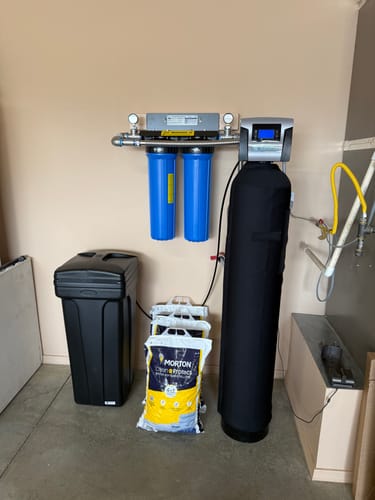
I'm the type of person who researches everything thoroughly before making significant purchases, so I dove deep into understanding water softening technology. The science behind it is actually fascinating—hard water contains dissolved calcium and magnesium minerals that cause all these problems.
During my research, I discovered that Washington's municipal water, while safe to drink, has a hardness level of around 12-15 grains per gallon in my area. That's considered "moderately hard" to "hard" on the water quality scale. No wonder I was experiencing all these issues.
I tested my water using a simple TDS meter and hardness test strips. The results confirmed what I suspected: 14 grains per gallon hardness and a total dissolved solids reading of 220 ppm. These numbers helped me understand what capacity water softener I'd need for my household of three.
The ion exchange process that water softeners use made perfect sense once I understood it. Hard water flows through resin beads that attract the calcium and magnesium ions, replacing them with sodium ions. The result is "soft" water that won't leave deposits or interfere with soaps and detergents.
I compared several different approaches: salt-based softeners, salt-free conditioners, reverse osmosis systems, and combination units. Each technology had its place, but for comprehensive hard water treatment, traditional ion exchange systems consistently came out on top in terms of effectiveness and value.
Why I Chose the SoftPro ECO
After weeks of research and comparing specifications from various manufacturers, several factors made the SoftPro ECO stand out for my situation.
The capacity was perfect for my household. With a 32,000 grain capacity, it could handle our family's water usage for about 8-10 days between regeneration cycles, based on my calculations. This meant efficient operation without excessive salt usage or water waste.
The upflow regeneration design caught my attention because it uses significantly less salt and water during the cleaning cycle compared to traditional downflow systems. Given that I'm environmentally conscious and want to minimize ongoing costs, this efficiency advantage was important.
The digital control valve offered the programming flexibility I wanted. I could set it to regenerate based on actual water usage rather than just a timer, which maximizes efficiency and ensures I always have soft water available when needed.
Build quality was another crucial factor. The fiberglass reinforced tank and high-grade resin meant this system was built to last. After my previous experience with a cheaper unit that failed after just four years, I wanted something that would provide reliable service for decades.
The NSF certification gave me confidence that this system met rigorous testing standards for both performance and safety. When you're treating all the water entering your home, these certifications matter.
Installation Experience: Easier Than Expected

I'll be honest—I was nervous about the installation. My plumbing experience extends to changing faucets and unclogging drains, so tackling a whole-house water softener felt like a big step up.
The SoftPro ECO arrived well-packaged with clear documentation. Everything was included: the main tank, control head, bypass valve, drain line, brine tank, and all necessary fittings. The installation manual was actually readable, with clear diagrams and step-by-step instructions.
I chose a location in my utility room near the main water line entry point. The unit needed about 3 feet of clearance around it for maintenance access, which fit perfectly in my available space. Having a floor drain nearby was essential for the regeneration discharge.
The most challenging part was cutting into the main water line to install the bypass valve system. I measured three times and cut once, following the old carpenter's rule. The compression fittings provided with the unit made the connections straightforward, though I did need to make one trip to the hardware store for additional pipe fittings specific to my plumbing configuration.
Programming the control head was surprisingly intuitive. https://www.softprowatersystems.com/collections/water-softeners-for-city-water I entered my water hardness level (14 grains), household size, and preferred regeneration time (2:00 AM). The system calculated optimal regeneration frequency automatically, though I could override it manually if needed.
The initial setup and first regeneration cycle took about 3 hours total. Have you ever experienced that satisfaction of completing a complex project and having it work perfectly on the first try?
That's exactly how I felt when soft water started flowing through my taps.
Performance Results: The Numbers Don't Lie
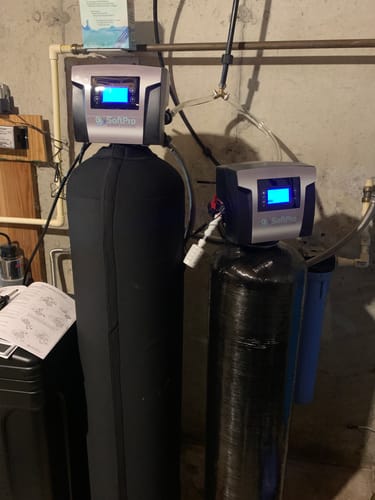
I'm a bit of a data nerd, so I tracked the system's performance carefully using test strips and my TDS meter. The results exceeded my expectations across every metric.
Hardness reduction was immediate and dramatic. Pre-treatment readings of 14 grains per gallon dropped to essentially zero—the test strips couldn't detect any remaining hardness minerals. This complete removal is exactly what you want from a quality water softener.
The taste improvement was noticeable within 24 hours. My coffee suddenly tasted like it should, bringing out flavors I hadn't experienced with hard water. Ice cubes became crystal clear instead of cloudy, and even plain water tasted cleaner and more refreshing.
Soap performance improved dramatically. I could create rich, lasting lather with half the amount of soap I used previously. Shampoo became significantly more effective, and my wife immediately noticed her hair felt softer and looked shinier.
The regeneration cycle runs automatically every 8-9 days based on our actual water usage. During regeneration, it uses approximately 6 pounds of salt and 35 gallons of water—very reasonable given the volume of water being treated.
I monitored our salt consumption carefully. A 40-pound bag of solar salt lasts about 6-7 weeks, costing roughly $6. That works out to less than $50 annually for salt, which is far less than I was spending on specialty soaps and cleaning products before.
Water pressure remained excellent throughout the house. I was concerned that adding a treatment system might reduce flow rates, but I measured no significant pressure drop at any fixture. The system's 1-inch piping and efficient valve design maintain full flow capacity.
Daily Life Improvements: Beyond the Technical Specs
The real value of the SoftPro ECO became apparent in the daily quality-of-life improvements that followed installation.
Bathroom cleaning became dramatically easier. Remember those stubborn white deposits that required aggressive scrubbing and harsh chemicals?
They simply stopped forming. My weekly bathroom cleaning routine now takes half the time, using just basic cleaners.
Laundry results improved noticeably. Clothes feel softer and look brighter, even without fabric softener. I reduced detergent usage by about one-third while achieving better cleaning results. White shirts stay whiter longer, and colored fabrics maintain their vibrancy.
My skin and hair health improved significantly. The dry, itchy feeling after showers disappeared within a week. My wife's hair stylist commented on how much healthier and more manageable her hair had become, without any changes to her hair care routine.

Kitchen cleanup became more pleasant. Dishes come out of the dishwasher spot-free without rinse aids. Glassware sparkles, and I no longer need to hand-dry everything to avoid water spots. Even my stainless steel sink maintains its shine with minimal effort.
The coffee improvement alone probably justified the investment. Have you ever realized you weren't actually tasting your coffee properly due to mineral interference?
The difference was remarkable—suddenly my morning brew tasted like it does at the best cafes.
Unexpected benefits emerged over time. Houseplants seemed healthier with soft water, and even my aquarium required less pH adjustment. The water heater runs more quietly, and I expect it will last significantly longer without mineral buildup damaging the elements.
Maintenance Reality: Simple but Important
Eight months in, the maintenance routine has proven straightforward and manageable. The most frequent task is adding salt to the brine tank every 6-7 weeks, which takes about five minutes.
I use solar salt pellets rather than rock salt because they dissolve cleanly without leaving residue. The brine tank holds about 200 pounds of salt, so I typically add one 40-pound bag when the level drops to about one-quarter full.
The system provides clear indicators when maintenance is needed. The control panel displays current salt levels and alerts me when it's time to refill. It also tracks water usage and system performance, which helps me optimize settings.
I clean the brine tank annually, though it stays remarkably clean with proper salt. This involves emptying any remaining salt, wiping down the interior, and checking the salt platform and brine well for any buildup.
The resin bed should last 10-15 years with normal use, according to the manufacturer. I plan to have the system professionally serviced after five years to ensure optimal performance, though it's been trouble-free so far.
Water usage during regeneration is minimal—about 35 gallons every 8-9 days. This adds roughly $2-3 monthly to my water bill, which is negligible compared to the benefits and savings in other areas.
Honest Assessment: What Could Be Better
While I'm extremely satisfied overall, no product is perfect, and the SoftPro ECO has a few minor limitations worth mentioning.
The control panel, while functional, feels slightly dated compared to modern smart home devices. Wouldn't it be convenient to monitor and adjust settings remotely through a smartphone app?
This feature would be nice for vacation homes or monitoring system status when traveling.
Salt loading requires some physical effort. Carrying 40-pound bags and pouring them into the brine tank isn't difficult, but it's not something everyone might want to handle regularly. Older homeowners or those with mobility limitations might prefer a system with easier salt loading.
The regeneration cycle is somewhat loud—not disruptive, but noticeable if you're in the same room. I scheduled it for 2:00 AM, so it doesn't affect daily activities, but light sleepers with utility rooms near bedrooms might notice the water flow sounds.
Installation space requirements are generous but necessary. The system needs adequate clearance for maintenance access, which might be challenging in smaller utility areas. Measure carefully before ordering to ensure proper fit.
The initial investment is significant—around $1,200-1,500 depending on installation requirements. While the long-term value is excellent, the upfront cost might be prohibitive for some budgets. However, I consider it a home improvement that pays dividends daily.
Would You Make the Same Choice Again?
Absolutely. The SoftPro ECO has exceeded my expectations in performance, reliability, and daily quality-of-life improvements.
The combination of effective hard water treatment, efficient operation, and solid build quality makes it an excellent value for homeowners dealing with moderate to severe hard water issues.
For families in areas with hard city water like mine, this system addresses multiple problems simultaneously: appliance protection, cleaning efficiency, personal care benefits, and improved taste. The monthly operating costs are minimal compared to the ongoing expenses of dealing with hard water.
If you're experiencing similar hard water symptoms—soap scum, appliance problems, dry skin, poor-tasting coffee—and you want a reliable, long-term solution, the SoftPro ECO deserves serious consideration. Just make sure you have adequate installation space and don't mind the routine salt maintenance.
Eight months later, I can't imagine going back to hard water. The daily conveniences and long-term appliance protection make this one of the best home improvements I've made.