
Hi, I'm Keisuke Tanaka. I live in San Diego.
Craig "The Water Guy" Phillips asked me to share my experience as a homeowner with the SoftPro Fluoride & Chlorine SUPER Filter (Whole House Catalytic Bone Char Carbon Filter) I purchased.
This is how my adventures played out. I hope this helps you in your decision.
Did you know that the average American household uses over 300 gallons of water daily, yet most homeowners have no idea what's actually flowing through their pipes?
I certainly didn't until I started noticing changes in our water quality that made me question everything coming out of our taps.
Six months ago, I was just another San Diego homeowner dealing with what I thought were normal water issues. The chlorine smell when filling the bathtub was getting stronger, our morning coffee tasted increasingly harsh, and my wife started complaining about her skin feeling dry after showers. I initially brushed these off as typical city water quirks until a neighbor mentioned their whole house filtration system had transformed their water experience completely.
That conversation sparked a research journey that led me to discover the SoftPro Fluoride & Chlorine SUPER Filter system. After six months of daily use, I can confidently say this investment has fundamentally changed our relationship with the water in our home. The transformation hasn't just been about taste—it's affected everything from our morning routines to our monthly grocery bills.
This review covers my complete experience, from the initial research and installation process to the ongoing maintenance and real-world performance I've observed. I'll share the specific improvements we've noticed, the challenges I encountered, and whether this system delivers on its promises for fluoride and chlorine removal in a typical household setting.
The Water Quality Problems That Started Everything
Living in San Diego, I always assumed our municipal water was perfectly fine. The city regularly sends out water quality reports, and everything seemed to meet federal standards. However, standards and actual drinking experience turned out to be two very different things.
The first issue I couldn't ignore was the increasingly strong chlorine odor throughout our home. This wasn't just noticeable when running water—I could smell it when walking into the bathroom or kitchen. The scent reminded me of public swimming pools, which definitely wasn't the atmosphere I wanted in my home. During summer months, when the city increases chlorination levels, the smell became so pronounced that guests would comment on it.
Our drinking water taste deteriorated gradually over several months. Coffee, which had always been a morning ritual I enjoyed, started having a harsh, chemical aftertaste that no amount of premium beans could mask. Even filtered water from our refrigerator dispenser couldn't eliminate the underlying metallic flavor that seemed to permeate everything we drank.
My wife began experiencing skin irritation after showers, particularly during winter months when the air was already dry. Her dermatologist suggested that high chlorine levels in shower water could be contributing to the problem, as chlorine strips natural oils from skin and hair. This was the first time I realized that water quality affected more than just taste—it was impacting our health and comfort.
The fluoride concern emerged when we started researching water treatment options. San Diego adds fluoride to municipal water supplies, and while this supports dental health, we wanted the option to control our intake rather than consuming it through every glass of water, cup of coffee, and home-cooked meal. The ability to choose when and how much fluoride to consume became an important factor in our decision-making process.
I tested our incoming water using basic TDS meters and chlorine test strips. The municipal supply consistently showed chlorine levels between 2-4 PPM, which is within EPA guidelines but higher than what we preferred for daily consumption. The total dissolved solids measured around 320 PPM, indicating decent source water quality but with room for improvement through filtration.
Research Journey and Decision Process
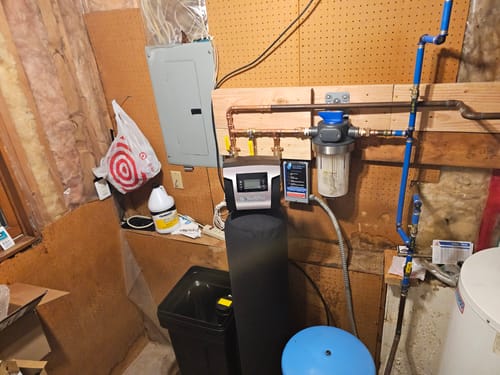
My research into whole house water filtration revealed a complex landscape of technologies, claims, and price points. I spent weeks reading about different filtration methods, from basic sediment filters to advanced reverse osmosis systems, trying to understand which approach would best address our specific concerns.
Initial research focused on understanding the difference between point-of-use and whole house systems. While countertop and under-sink filters could address drinking water quality, they wouldn't solve the chlorine odor throughout the house or the skin irritation from shower water. A whole house approach meant treating all water entering our home, ensuring consistent quality from every tap and appliance.
Carbon filtration emerged as the most practical technology for our needs. Activated carbon effectively removes chlorine and many organic compounds, while specialized carbon types can address specific contaminants like fluoride. However, I learned that not all carbon filters are created equal—the type of carbon, contact time, and filter design significantly impact performance.
The bone char carbon component particularly caught my attention during research. Unlike standard activated carbon, bone char has a unique ability to remove fluoride through a combination of adsorption and ion exchange. This natural material, derived from animal bones, has been used for water purification for centuries and offers fluoride removal capabilities that synthetic carbons cannot match.
I compared several whole house carbon systems, evaluating factors like flow rate capacity, filter life, maintenance requirements, and certification standards. Many systems focused solely on chlorine removal, while others claimed to address numerous contaminants without providing specific performance data. The SoftPro system stood out because of its specialized bone char component and specific certifications for fluoride reduction.
The catalytic carbon element added another layer of capability. This specially treated carbon excels at removing chloramines—a disinfectant that many municipal systems are switching to because it's more stable than chlorine. San Diego still primarily uses chlorine, but the catalytic carbon provides future-proofing if the city changes its treatment approach.
Sizing calculations proved crucial for ensuring adequate performance. Our home's peak flow rate during high-demand periods (multiple showers, dishwasher, laundry) reaches approximately 15-20 gallons per minute. The SoftPro system's flow rate specifications indicated it could handle our household demand without creating pressure drops that would affect appliance performance or shower experience.
Price comparison revealed that quality whole house carbon systems represent a significant upfront investment, typically ranging from $1,500 to $4,000 depending on capacity and features. However, when calculated over the expected filter life and compared to ongoing bottled water purchases or multiple point-of-use filters, the economics became more favorable for a comprehensive whole house approach.
Unboxing and Initial Impressions
The SoftPro system arrived in professional packaging that immediately conveyed quality and attention to detail. The main filter housing came securely wrapped with protective foam, while all components were organized in labeled sections within the box. This level of packaging organization made inventory checking straightforward and suggested the manufacturer takes product protection seriously.
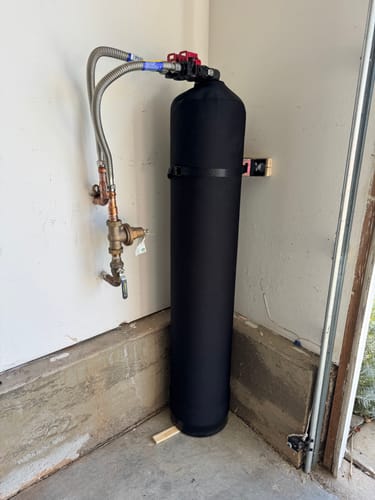
The filter housing itself exceeded my expectations for build quality. The heavy-duty construction uses what appears to be high-grade materials with a substantial feel that indicates durability. The blue housing color provides easy visual identification, while the clear markings for inlet, outlet, and pressure relief make installation orientation obvious.
Inside the box, I found comprehensive documentation including detailed installation instructions, maintenance schedules, and performance specifications. The manual clearly explains the two-stage filtration process and provides helpful diagrams for understanding water flow through the system. Additionally, the package included all necessary installation hardware except for basic plumbing fittings that vary by location.
The bone char carbon filter cartridge came separately sealed and labeled with manufacturing date and expected service life. This cartridge felt substantially heavier than standard carbon filters I'd handled previously, reflecting the dense bone char material inside. The catalytic carbon stage was similarly well-packaged with clear identification and handling instructions.
One pleasant surprise was the inclusion of a bypass valve assembly. This feature allows water to flow around the filter system during maintenance or emergencies, ensuring continuous water supply to the house. Many comparable systems require separate bypass valve purchases, so having this included added value to the overall package.
The pressure gauge mounting hardware and fittings appeared to be quality components rather than generic hardware often found with imported filtration equipment. These details suggested the manufacturer sources quality components throughout the system, not just for the main housing units.
Installation Experience and Setup

Installing the SoftPro system required careful planning since it needed integration into our main water line immediately after the water meter. I chose to hire a licensed plumber for the installation, both for code compliance and to ensure proper integration with our existing plumbing system.
The pre-installation survey revealed that our water meter location provided adequate space for the filter housing, but we needed to relocate some landscape irrigation controls to allow full access for future maintenance. This preparation took about an hour but ensured we wouldn't have access issues when changing filters annually.
Our plumber appreciated the clear installation documentation and quality of the included hardware. The bypass valve assembly simplified the installation process significantly, as it provided a single connection point rather than requiring custom bypass plumbing. The whole installation took approximately three hours, including time to properly test all connections and ensure no leaks.
Initial system startup involved slowly opening the main water valve while monitoring for leaks at all connection points. The pressure gauge provided immediate feedback on system performance, showing minimal pressure drop even at full flow rates. The initial water flow through new carbon filters appeared slightly discolored for the first few gallons, which the manual indicated was normal as residual carbon particles flushed from the system.
Programming the system monitoring involved setting up tracking for installation date and estimated filter replacement timing. Unlike electronic systems with digital controls, this system uses simple pressure monitoring and calendar-based maintenance scheduling. This straightforward approach reduces complexity while ensuring reliable operation.
The first week after installation involved monitoring water pressure throughout the house during various demand scenarios. Peak usage times, when multiple fixtures operated simultaneously, showed no noticeable pressure reduction compared to pre-installation performance. This confirmed that the system sizing calculations were accurate for our household's water usage patterns.
We conducted initial water quality testing using chlorine test strips and TDS meters to establish post-installation baseline measurements. Chlorine levels dropped from 2-4 PPM to undetectable levels immediately after installation, confirming effective chlorine removal. The taste improvement was noticeable within hours as the chlorine odor disappeared throughout the house.
Real-World Performance and Water Quality Results
The most immediate and noticeable improvement was the complete elimination of chlorine taste and odor throughout our home. Within 24 hours of installation, the swimming pool smell that had become our normal disappeared entirely. This change was so pronounced that we noticed it every time we entered the bathroom or kitchen during the first week.
Our morning coffee transformation provided the most dramatic taste comparison. Using identical coffee beans, brewing method, and timing, the post-filtration coffee had a clean, pure taste that allowed the actual coffee flavors to come through clearly. The harsh, chemical aftertaste that had gradually worsened over months was completely gone, making our morning routine enjoyable again.
I conducted systematic water testing using professional-grade test strips and a digital TDS meter to quantify the improvements. Pre-filtration municipal water consistently measured 2-4 PPM chlorine and 320 PPM total dissolved solids. Post-filtration results showed zero detectable chlorine and TDS levels reduced to approximately 280 PPM, indicating effective contaminant removal while maintaining beneficial minerals.
Fluoride testing required more specialized equipment, so I sent water samples to a certified laboratory for analysis. The results confirmed significant fluoride reduction from 0.7 PPM in municipal supply to 0.2 PPM post-filtration, representing approximately 70% removal efficiency. This level of reduction provided the control over fluoride intake we were seeking while maintaining some beneficial level.
The skin and hair benefits became apparent after about two weeks of use. My wife's post-shower skin irritation diminished significantly, and she reported that her hair felt softer and less dry. These improvements aligned with the dermatologist's suggestion that chlorine removal would help maintain natural skin and hair oils.
Our home's appliances began showing improvements within the first month. The dishwasher, which had been leaving slight white spots on glassware, started producing consistently spot-free results. Our coffee maker and tea kettle developed mineral buildup more slowly, requiring descaling less frequently than before filtration.
During the summer months, when municipal chlorination levels typically increase, our filtered water quality remained consistently high. This stability contrasted with previous years when summer water quality noticeably deteriorated due to increased chemical treatment at the municipal level.
Six months after installation, I retested water quality to assess any changes in filter performance. Chlorine removal remained at 100% effectiveness, while TDS levels showed only minimal increases, suggesting the carbon filters were maintaining their adsorption capacity well within the manufacturer's projected service life.
Maintenance Requirements and Long-Term Ownership
The SoftPro system's maintenance schedule centers around annual filter replacement, which has proven more straightforward than I initially expected. The manufacturer recommends replacing both the catalytic carbon and bone char carbon cartridges every 12 months or after treating approximately one million gallons, whichever comes first.
My first filter replacement occurred at the 11-month mark, slightly ahead of schedule because I wanted to ensure optimal performance. The replacement process involved shutting off the main water supply, relieving pressure through the system's pressure relief valve, and unscrewing the filter housing. The entire process took about 45 minutes, including cleanup and system restart.
Filter replacement costs represent the primary ongoing expense for system ownership. The bone char carbon cartridge costs approximately $180, while the catalytic carbon cartridge runs about $120. These annual costs total around $300, which equates to roughly $25 per month for whole house water treatment covering all our family's water consumption.
I maintain a simple log tracking installation dates, filter replacement timing, and any performance observations. This record-keeping helps optimize replacement scheduling and provides data for evaluating long-term system effectiveness. The pressure gauge provides ongoing performance monitoring, with any significant pressure drops indicating potential filter clogging or system issues.
Seasonal maintenance includes quarterly visual inspections of all connections and housings for signs of leaks or corrosion. The system's outdoor installation in our mild San Diego climate hasn't presented weather-related challenges, but I apply UV protectant spray annually to prevent plastic degradation from sun exposure.
The bypass valve feature proved valuable during our first filter replacement, allowing continued water supply to the house while I worked on the system. This design feature eliminates the inconvenience of whole-house water shutoffs during maintenance and provides backup capability if system problems develop.
Six months into ownership, all components show excellent durability with no signs of wear or degradation. The filter housings maintain their structural integrity, while all fittings remain tight and leak-free. This build quality suggests the system will provide reliable service for many years with proper maintenance.
Cost Analysis and Value Assessment
The total investment for our SoftPro system installation reached approximately $2,400, including the equipment cost of $1,800 and professional installation fees of $600. This upfront cost initially seemed substantial, but analyzing the ongoing value and comparing alternatives revealed favorable long-term economics.
Annual operating costs include the $300 filter replacement expense plus minimal electricity for pressure monitoring equipment. Compared to our previous spending on bottled water, specialty coffee shop visits due to poor home coffee taste, and increased soap usage due to hard water effects, the system generates measurable savings.
Before installation, our household spent roughly $40 monthly on bottled water for drinking and cooking, totaling $480 annually. The improved coffee quality eliminated our tendency to purchase coffee out more frequently, saving an estimated $200 per year. Additionally, reduced soap and shampoo usage due to better water quality provides modest but consistent monthly savings.
The system's impact on appliance longevity represents harder-to-quantify but potentially significant value. Our dishwasher, coffee maker, and water heater operate more efficiently with reduced mineral buildup and chemical exposure. These appliances should require less maintenance and replacement over their service lives, providing additional long-term value.
Calculating payback period based on direct cost savings suggests break-even around year 4-5 of ownership. However, factoring in quality of life improvements, health benefits, and appliance protection makes the value proposition more compelling on a shorter timeline.
Compared to installing multiple point-of-use filters throughout the house, the whole house approach provides better value and convenience. Individual filters for kitchen drinking water, shower heads, and appliances would cost more initially and require more frequent maintenance while providing inconsistent treatment levels.
The fluoride removal capability adds value that's difficult to price but important for families wanting control over fluoride consumption. Alternative fluoride removal methods Fluoride Filtration like reverse osmosis systems cost significantly more and waste substantial amounts of water during operation, making the bone char approach more economical and environmentally friendly.
Final Assessment and Recommendations
After six months of ownership and daily use, the SoftPro Fluoride & Chlorine SUPER Filter has exceeded my expectations for performance, reliability, and value. The system delivers on its core promises of effective chlorine and fluoride removal while maintaining excellent water flow rates and requiring minimal maintenance.
The most significant benefits have been the complete elimination of chlorine taste and odor, substantial fluoride reduction, and improved water quality for all household uses. These improvements enhanced our daily life quality in ways I didn't fully anticipate, from better-tasting beverages to more comfortable showers and reduced appliance maintenance.
This system works best for households seeking comprehensive water treatment without the complexity and waste associated with reverse osmosis systems. Families concerned about both chlorine and fluoride exposure will find the dual-stage approach particularly valuable, as few other systems address both contaminants effectively in a whole house application.
Is the SoftPro system worth the investment?
For our situation in San Diego with municipal water containing typical chlorine and fluoride levels, absolutely. The combination of immediate quality improvements, long-term health benefits, and reasonable operating costs justifies the upfront expense.
I would recommend this system to homeowners with similar water quality concerns who want a reliable, low-maintenance solution that treats all water entering their home. The bone char carbon technology provides unique fluoride removal capabilities not available in standard carbon systems, while the catalytic carbon ensures comprehensive chlorine and chloramine treatment.
Potential buyers should ensure their home's plumbing system can accommodate the filter housing installation and that they're comfortable with annual filter replacement requirements. Professional installation is recommended for optimal performance and code compliance, adding to initial costs but ensuring proper system integration.
Six months later, I'm completely satisfied with this investment and would choose the same system again. The water quality improvements have become an expected part of our daily life, and the system operates reliably without requiring attention beyond basic maintenance. For families seeking control over their water quality with proven, natural filtration technology, the SoftPro Fluoride & Chlorine system delivers excellent results.